This blog is for the use of the whole parish; please let me know if you'd like to contribute.
Chris (email link at the bottom of each page)
The Kingdom
12-11-2020, 10:07Jesus, kingdomPermalinkPhilemon 7–20 • Psalm 145(146):7–10 • Luke 17:20–25

http://endtimestruth.com/wp-content/uploads/2016/01/Sun-and-Clouds-Images-of-the-Kingdom-Dollarphotoclub.jpg
A key ingredient of Jesus’ teaching is that the kingdom of God is within us. Expounding this truth, Paul taught that the kingdom of God is not a matter of rules and regulations but ultimately of righteousness, peace and joy in the Holy Spirit (see Rom. 14:17). St Anthony of Egypt said: “There is no point in us travelling to find the kingdom of heaven, or crossing the sea in search of virtue. As the Lord has already told us, God’s kingdom is within you.”
Jesus turned the idea of the kingdom of God on its head. The Jewish people were expecting a political Messiah who would overthrow their Roman oppressors and re-establish the Davidic dynasty They rejected Jesus because he did not measure up to these expectations. The kingdom of God was breaking into their world but they were too preoccupied with their own notions and ideas of the kingdom to recognise it.
The kingdom of God, manifested in Jesus, is first and foremost a spiritual reality rather than something of this world (vv. 20-21;John 18:36). The kingdom is not a place or a way of life but a person. Jesus is the kingdom and the kingdom is Jesus. Where Jesus is, there is the kingdom. As the Scripture scholar Origen once said: “The gospel of Jesus is autobasilea, the kingdom himself.”
Reflecting on the words contained in the Our Father, the great saint and Church father Cyprian of Carthage wrote, “ ‘Thy kingdom come’ . . . Christ himself is the kingdom of God, whom we day by day desire to come, whose advent we crave to be quickly manifested to us. For Since he himself is the resurrection, because in him we rise again, so also the kingdom of God may be understood to be himself, because in him we shall reign.” The closer we are then to Jesus, the closer we are to the kingdom of God. And the closer we are to Jesus, the more we wıll pray for his return to earth, because those who love long to see the beloved, the One they love.
We manifest the kingdom of God to the world by showing that we know Jesus. How do we show this? By our witness of peace, love, joy and righteousness in the power and grace of the Holy Spirit.
“Let the proud seek and love earthly kingdoms, but blessed are the poor in spirit for theirs is the kingdom of heaven.” ( St Augustine)
Chris
From Bible Alive
The Good of Money
07-11-2020, 10:12Permalink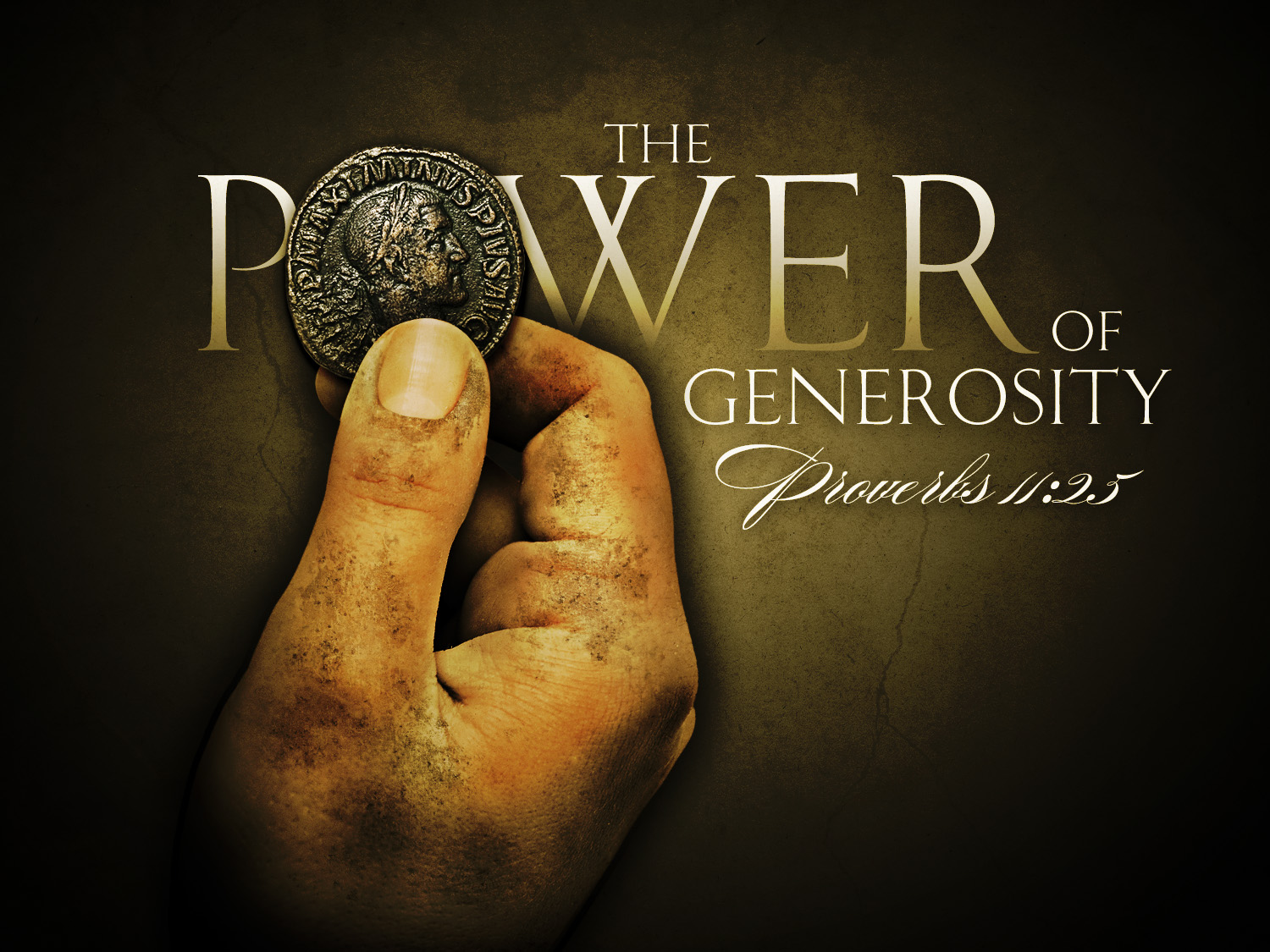
Philippians 4:10–19 • Psalm 111(112):1–9 • Luke 16:9–15
Money, money, money!’ – as the Abba song goes – ‘it’s the rich man’s world.’ And that’s where the problem lies. Money is tainted, as Jesus describes it, because it carries the danger of reducing our world to the attainment or acquisition of money. When money is our world, then it also becomes our God and we can find ourselves even serving it.
Like the Abba song, today’s few verses mention money so many times that it almost seems like a little world in which money dominates. But, of course, there is no real intrinsic problem with money. It is strictly an artificial means invented by our ancestors to facilitate trading with each other In the past, trading happened through barter, putting an equivalent value on various goods, even tıme, so that a day of a man’s work was said to be equivalent to, for example, a sack of potatoes. Money was invented to represent the same value as the hours of work or a quantity of vegetables, so that we would not need to carry around sacks of potatoes if we wanted a skilled worker to do a job for us. Money was a great idea and it facilitated society because we could give something we had in exchange for something we wanted. It was a way of using our gifts, skills, goods to service others and to benefit from those skills, etc., of others in return.
The taint of money comes not from money itself but from the human heart in which greed resides. From within the heart, the need and desire to build society and to exchange goods and skills can be corrupted into the lust simply for profit. The heart can produce a self-centredness that wants to take advantage of others. As mentioned above, the corrupt heart can shrink the world simply to ourselves.
Jesus invites us to use money in a different way. Profit is no bad thing: it becomes bad only insofar as it is used wholly to serve ourselves. What matters in the end is the state of our heart. It is through our union with Jesus that our hearts are transformed. Like the heart of Jesus, who came to serve and give his life as a ransom for many, our hearts can give money its true value in the building of society and the kingdom of God.
Most Sacred Heart ofJesus make our hearts like unto thine. Amen.
Chris
From Bible Alive
The meaning of Christ, by St Paul
03-11-2020, 07:18God-man, love, sacrifice, WitnessPermalink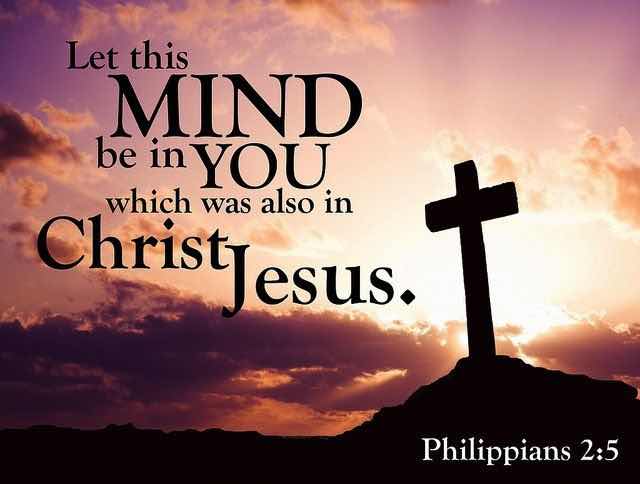
Philippians 2: 5-11
In your minds you must be the same as Christ Jesus: His state was divine, yet he did not cling to his equality with God but emptied himself to assume the condition of a slave, and became as men are; and being as all men are, he was humbler yet, even to accepting death, death on a cross. But God raised him high and gave him the name which is above all other names so that all beings in the heavens, on earth and in the underworld, should bend the knee at the name of Jesus and that every tongue should acclaim Jesus Christ as Lord, to the glory of God the Father.
A note from the Life Application Bible:
2:5-11 These verses are probably from a hymn sung by the early Christian church. The passage holds many parallels to the prophecy of the suffering servant in lsaiah 53. As a hymn, it was not meant to be a complete statement about the nature and work of Christ. Several key characteristics of Jesus Christ, however, are" praised in this passage: (1) Christ has always existed with God;
(2) Christ is equal to God because he is God (John 1:1ff; Colos- sians 1:15—19);
(3) though Christ is God, he became a man in order to fulfil God’s plan of salvation for all people;
(4) Christ did not just have the appearance of being a man — he actually became human to identify with our sins;
(5) Christ voluntarily laid aside his divine rights and privileges out of love for his Father;
(6) Christ died on the cross for our sins so we wouldn’t have to face eternal death;
(7) God glorified Christ because of his obedience;
(8) God raised Christ to his original position at the Father’s right hand, where he will reign for ever as our Lord and Judge.
How can we do anything less than praise Christ as our Lord and dedicate ourselves to his service!
Jesus and the Pharisees
01-11-2020, 10:24compassion, God's will, healingPermalinkPope Francis must be a bit of a nightmare for the Roman Curia. His easygoing, warm and inviting Latino approach to life has certainly ruffled a few feathers and raised a few eyebrows over the years since he became Pope. He has a kind of healthy and rather amusing approach to pomp, circumstance and the trappings of his centuries-old office.
However, Pope Francis is undoubtedly very conscious that he stands in the shoes of the humble fisherman. He refuses to wear the traditional papal red leather shoes, preferring instead his well-worn pair. He chooses to travel in a clapped-out Ford rather than the papal limo. He has declined to have the kind of security fitting for a leader of state, even saying no to bulletproof glass. He refuses to be a prisoner of the Vatican but rather its liberator. We should thank God that he is our Pope. Of course, Pope Francis is walking in the steps of jesus — because Jesus too ruffled feathers, kicked against the status quo and moved in the power of the Spirit.
Today we join Jesus seated at a 'nd of banquet, given, it would appear, in his honour. Many of the religious establishment of the day were there, watching to see whether he would step out of line. It is very likely that the sick man was a fellow guest but, remarkably, when he was healed by Jesus there was no joyful celebration, only stony silence. The law of the Sabbath had taken precedence over the law of God’s life and grace. What is at the heart of the matter here? Jesus was constantly challenging preconceptions about God and how to live by faith. He clearly loved the Pharisees, who on the whole were good men devoted to God and his law. They were, however, closed to what God was doing in their midst.
At the World Youth Day in Brazil in 2013, Pope Francis urged the young people present to mess things up in their parishes when they returned home. He meant that when following God’s will we may have to step out of line, ruffle feathers and challenge the status quo – we need to respect what has gone before but be open to what the Spirit is doing now in our midst.
Lord teach me to be open to the work of the Spirit both in my own life and in your world today.
Chris
From Bible Alive
Philippians 1:1–11 • Psalm 110(111) • 1–6 • Luke 4:1-6
Jesus and the Pharisees
26-10-2020, 14:36love, spirit, sufferingPermalinkToday’s Scripture packs two strikingly different ideas into one reading: healing and hypocrisy. The healing is of a woman who had been crippled for eighieen years, and the hypocrisy is on the part of a synagogue official who cannot see what is happening right before his eyes – a woman being miraculously freed from her terrible pain and suffering. The synagogue ruler had been too crippled by the letter of the law to recognize the true spirit of the law.
The Pharisees allowed animals to be taken care of on the Sabbath (see Luke 14:5), so why should they begrudge a sick woman this extraordinary and wonderful gift of God? Such harsh, legalistic and quite frankly mean behaviour from so-called religious people is staggering, isn’t it? What had happened to their understanding of God and their understanding of the dignity of the human person to make them think like this?
Yet it is perhaps too easy to be judgemental and harsh towards the Pharisees. We can find ourselves saying to God, ‘I thank you, God, that I am not like these Pharisees because I would not let myself become so confused and legalistic that I applied the letter and not the spirit of the law.’ To think like this is, of course, to have fallen into the same trap! Make no mistake, Jesus loved the Pharisees – it is obvious from his eagerness to correct their thinking.
To live in the Spirit we need to be very clear about two things: the first is that God loves everybody, and the second is that every human being is created in the image and likeness of God and God wants the best for everybody. The Pharisees made the error of assuming they knew how God thought, but they could not have been more wrong. Jesus came to set us all free because we all need to be set free. The Pharisees’ religion had made them narrow-minded and mean-spirited, whereas the Spirit makes us big-hearted and generous. The Pharisees’ religion had made them hypocrites (a very real tension for all religious people), but the Spirit convicts us of our sin and makes us grateful and forgiven sinners in continual need of God’s healing and mercy.
The all-sufficient Physician of humanity, the Saviour, heals both body and soul. (St Clement of Alexandria)
Chris
From Bible Alive
Ephesians 4:32-56 • Psalm 1:1–6 • Luke 13:10–17
Bishop David's letter to his priests
17-10-2020, 18:10encouragement, WitnessPermalinkBishop David has written to priests to pass his thanks onto volunteers who are stewarding in our catholic churches and making it possible for them to remain open. Recognising the struggle many churches face to find volunteers and the pressure on those who do volunteer as the pandemic continues much longer than any of anticipated, Bishop David writes:
My dear friends in Christ,
Greetings to you in the name of our Servant Lord! I want to write to you to express my personal gratitude for your service as a steward in your parish community. It is through your personal generosity and dedication that we have been able to reopen our churches for prayer, and to keep them open, for the celebration of the Holy Sacrifice of the Mass and other sacraments.
Your patient attention to preparing our churches, through regular cleaning, assistance with hand gel and guidance of visitors through the one-way systems in place, whilst ensuring social distancing, have made a real difference. Parishioners are able to come back to church, feeling safe and secure in these still very challenging times.
I have seen for myself, the effective and efficient manner in which you have carried out your stewardship. One might almost say in a very professional way. This has ensured that our churches are some of the most safest places and buildings throughout the land for people to enter.
All this is very necessary for us to continue. I know that it is difficult for some parish communities to find volunteers. None of us have realised how long this phase of the pandemic would be. I want to encourage you to continue to volunteer, and I encourage our priests to seek other volunteers to help alongside you with this indispensable ministry. I also appreciate how difficult your role can be at times, when you are challenged by those who do not wish to follow the guidelines.
From time to time, we hear talk of what is essential and non-essential. Unfortunately, there is no account in this discourse of the essential nature of our common lives as Disciples of Christ. For us as Catholics, our participation in Holy Mass and the sacraments does not belong to the non-essential. This coming together as a community, called out of darkness into light, is what defines us. In this regard, your volunteer ministry as stewards is a great blessing for us all.
Please be assured of my remembrance of you in my daily Rosary, and please do keep me in your prayers.
Yours devotedly in Christ,
Bishop David
Jesus and the Pharisees
15-10-2020, 07:57Holy Spirit, hypocrisy, todayPermalinkLuke 11:47–52 • St Teresa of Avila
Make no mistake and be under no illusion, the Pharisees and Jesus were on a collision course and it was never going to be pretty — the gloves were off, the hostility was out in the open. Jesus did not hold back but called them to account for the blood of the prophets from Abel, the son of Adam and Eve (Gen. 4), to Zechariah, son of Jehoiada, the chief priest during the reign of Kingjoash of Judah (837–800 BC), who was killed in the temple when he tried to call the nation back to true worship (see 2 Chron. 24:17–22). Jesus’s fate was sealed, his path to the cross certain, as the religious establishment of the day was rocked to its very core by his exposure of their hypocrisy.
The Pharisees built tombs for the prophets their forefathers had persecuted and martyred; they claimed to speak for God but resisted the words. spoken by the prophets. Injesus we see the culmination of the ministry of every prophet of old. Israel’s prophets spoke about Christ and always pointed to Christ. Now someone greater than the prophets, the Christ, was among them, and so began a profound resistance which would culminate in the plot to kill him. Jesus condemned the Pharisees because their hearts had become hard and resistant to God’s plan of salvation. They had become closed to the work of God in their midst and in their lives.
True, we might not kill the prophets but we can kill the work of God by being hard and resistant to what the Spirit is doing in our lives and in our Church. The Spirit is at work today in many individuals and movements or streams, such as the Charismatic movement, the Neocathechumenate, Opus Dei, Focolare, the MaltFriscans, Youth 2000 and, last but not least, the sincere young people in our parishes who are ever eager to sing at Mass, play musical instruments and participate in the life of the Church. We must guard our hearts against our own prejudice and preferences – the Spirit blows where the Spirit wills, and we must learn to celebrate his work in our midst and not undermine it or even kill it.
Heavenly Father, by your grace may we resist and overcome ways of thinking which limit the work of the Spirit, and may we rejoice in what you are doing in the Church today.
Ephesians 1:1–10 • Psalm 97(98) • Luke 11:47–54
Chris
Occupy your mind with good thoughts
09-10-2020, 07:24Christ, cross, evil, goodPermalinkSt John Henry Newman (Feast)
2 Timothy 1:1–5 • Psalm 95 (96) • John 15:9–17
There are two extremes into which people fall when it comes to their attitude to evil and the devil. At one end of the spectrum is to believe in the devil and evil excessively, and at the other not to believe in evil or the devil at all — with plenty of people fitting somewhere in-between! This is as true in our age as any other, and we have ample evidence of excessive belief in innumerable blockbuster films and books and even weekend courses on the occult and demons.
We, for our part, are guided and governed by the Scriptures and the wisdom of the Church passed down through the ages. The Church has always affirmed that the devil and his realm is a reality (see, e. g. Catechism of the Catholic Church 407) which we ignore at our peril. Jesus is the strong man who by his death and resurrection has redeemed the world. By his cross, in his name and through his blood we who have received the grace of baptism are protected and kept safe, but we need to call upon this shield of God’s grace.
We are invited to enter into the spiritual battle which is waged every day. This notion of spiritual conflict or engaging the enemy can seem rather obscure or remote, especially when the daily struggle to deal with the problems of this world is hard enough. Perhaps the great saint and martyr Thomas More shed some light on' this when he said: “Occupy your minds with good thoughts, or the enemy will fill them with bad ones; unoccupied they cannot be.” Being passive and undisciplined in our thinking and in our behaviour can open us up to the devil and his ways. The devil delights in an idleness of mind and a passivity which does not actively take up the good fight of faith.
A mind filled with God’s truth and God’s thoughts is a mind which is bolstering and protecting itself against the snares and attacks of the Evil One. God created us with the gift of free Will, and the greatest challenge we face every day is to choose God and reject the devil, to choose the good and repel evil, and to stand firm in faith.
Lord Jesus, protect us from the snares, wiles and schemes of the Evil One. I call upon the power of your name, cross and blood, that I may live more and more in your presence.
Chris
Who is Jesus?
25-09-2020, 09:30Christ, faith, Jesus, Peter, WitnessPermalinkEcclesiastes 3:1-11 • Psalm 143(144) 1–4 • Luke 9:18-22
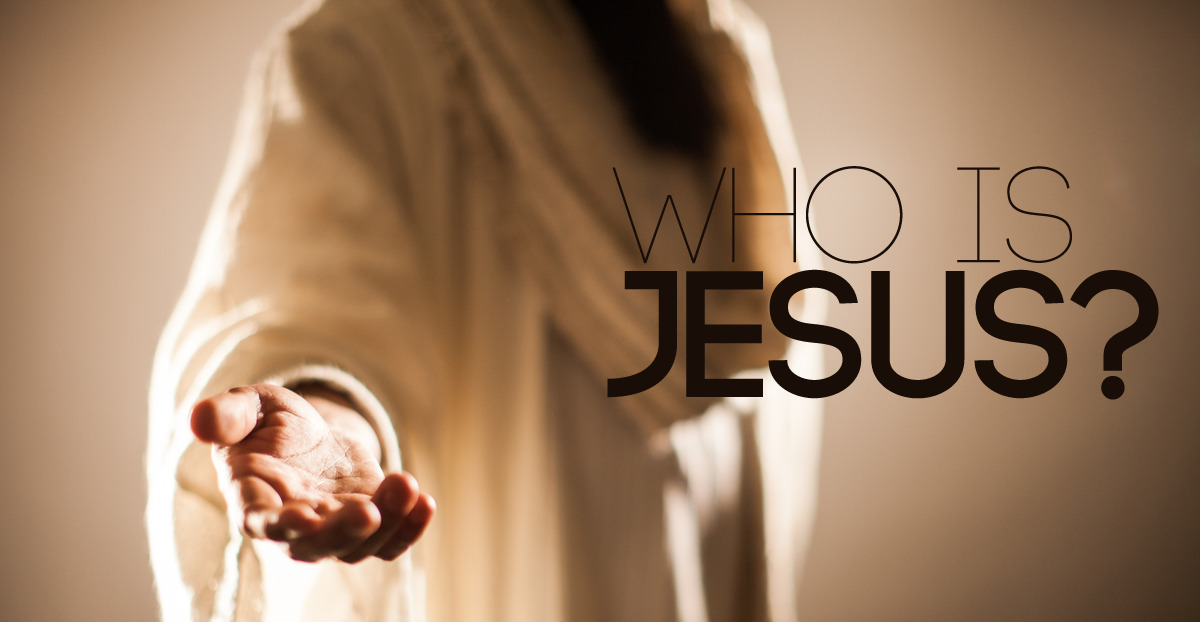
It is sometimes difficult to express simply and clearly what we believe. For some, it may stem from a lack of confidence or a fear of being rejected. For others, it might be that they don’t even have the words.
Take those suffering with dementia, for example. There are in the UK 700,000 people suffering from dementia, and that number is steadily increasing. Being diagnosed with dementia is distressing for the individual concerned and for their family and friends. As someone’s ability to relate to the world around them is diminished, they become more isolated. Communication becomes increasingly difficult – they might not be able to talk or to communicate in other ways.
Jesus asked Peter, ‘Who do you say that I am?’ (v 20). Peter knew exactly who Jesus was, just as God knows exactly who we are. He knows the number of hairs on our head (Luke 12:7). Whatever happens to our mental functions, we remain spiritual beings. The Catechism fo the Cat/90hr Church states that ‘The dignity of the human person is rooted in his creation in the image and likeness of God’ (para. 1700).
Peter recognised Jesus as the Christ (v. 20). Do we look for and recognise God in those with dementia? The decline in someone’s mental faculties does not end their personal journey of faith or diminish their full human integrity. They continue on their pilgrimage, usually aware of the continuing importance of their deeply held spirituality, and often finding comfort in familiar prayers and rituals. God is there in their loneliness to give them comfort.
Would Peter have openly stated his faith if he hadn’t been directly challenged byJesus? He might not have made such a declaration without prompting, but he knew what he thought and felt. He had faith. For those witnessing the mental decline of their loved ones, faith becomes all the more important too. “God is our refuge and strength, a very present help in trouble. Therefore we will not fear…” (Ps. 46:1-2).
Loving Father you are close to the broken-hearted. Look with compassion on those whose lost memories have robbed them of home and belonging. Comfort and strengthen those who care for them. May they make their home in you. This we ask through Christ our Lord, Amen.
Chris
Graphic from: https://slmnallotey.wordpress.com/2016/07/26/jesus-the-word-of-god/
Some Wisdom and Calm from Richard Rohr
22-09-2020, 07:29contemplation, God, YouPermalink
Some simple but urgent guidance to get us through these next months.
I awoke on Saturday, September 19, with three sources in my mind for guidance: Etty Hillesum (1914 – 1943), the young Jewish woman who suffered much more injustice in the concentration camp than we are suffering now; Psalm 62, which must have been written in a time of a major oppression of the Jewish people; and the Irish Poet, W.B.Yeats (1965 – 1939), who wrote his “Second Coming” during the horrors of the World War I and the Spanish Flu pandemic.
These three sources form the core of my invitation. Read each one slowly as your first practice. Let us begin with Etty:
There is a really deep well inside me. And in it dwells God. Sometimes I am there, too … And that is all we can manage these days and also all that really matters: that we safeguard that little piece of You, God, in ourselves.
—Etty Hillesum, Westerbork transit camp
Note her second-person usage, talking to “You, God” quite directly and personally. There is a Presence with her, even as she is surrounded by so much suffering.
Then, the perennial classic wisdom of the Psalms:
In God alone is my soul at rest.
God is the source of my hope.
In God I find shelter, my rock, and my safety.
Men are but a puff of wind,
Men who think themselves important are a delusion.
Put them on a scale,
They are gone in a puff of wind.—Psalm 62:5–9
What could it mean to find rest like this in a world such as ours? Every day more and more people are facing the catastrophe of extreme weather. The neurotic news cycle is increasingly driven by a single narcissistic leader whose words and deeds incite hatred, sow discord, and amplify the daily chaos. The pandemic that seems to be returning in waves continues to wreak suffering and disorder with no end in sight, and there is no guarantee of the future in an economy designed to protect the rich and powerful at the expense of the poor and those subsisting at the margins of society.
It’s no wonder the mental and emotional health among a large portion of the American population is in tangible decline! We have wholesale abandoned any sense of truth, objectivity, science or religion in civil conversation; we now recognize we are living with the catastrophic results of several centuries of what philosophers call nihilism or post-modernism (nothing means anything, there are no universal patterns).
We are without doubt in an apocalyptic time (the Latin word apocalypsis refers to an urgent unveiling of an ultimate state of affairs). Yeats’ oft-quoted poem “The Second Coming” then feels like a direct prophecy. See if you do not agree:
Turning and turning in the widening gyre
The falcon cannot hear the falconer;
Things fall apart; the centre cannot hold;
Mere anarchy is loosed upon the world,
The blood-dimmed tide is loosed, and everywhere
The ceremony of innocence is drowned;
The best lack all conviction, while the worst
Are full of passionate intensity.
Somehow our occupation and vocation as believers in this sad time must be to first restore the Divine Center by holding it and fully occupying it ourselves. If contemplation means anything, it means that we can “safeguard that little piece of You, God,” as Etty Hillesum describes it. What other power do we have now? All else is tearing us apart, inside and out, no matter who wins the election or who is on the Supreme Court. We cannot abide in such a place for any length of time or it will become our prison.
God cannot abide with us in a place of fear.
God cannot abide with us in a place of ill will or hatred.
God cannot abide with us inside a nonstop volley of claim and counterclaim.
God cannot abide with us in an endless flow of online punditry and analysis.
God cannot speak inside of so much angry noise and conscious deceit.
God cannot be found when all sides are so far from “the Falconer.”
God cannot be born except in a womb of Love.
So offer God that womb.
Stand as a sentry at the door of your senses for these coming months, so “the blood-dimmed tide” cannot make its way into your soul.
If you allow it for too long, it will become who you are, and you will no longer have natural access to the “really deep well” that Etty Hillesum returned to so often and that held so much vitality and freedom for her.
If you will allow, I recommend for your spiritual practice for the next four months that you impose a moratorium on exactly how much news you are subject to—hopefully not more than an hour a day of television, social media, internet news, magazine and newspaper commentary, and/or political discussions. It will only tear you apart and pull you into the dualistic world of opinion and counter-opinion, not Divine Truth, which is always found in a bigger place.
Instead, I suggest that you use this time for some form of public service, volunteerism, mystical reading from the masters, prayer—or, preferably, all of the above.
You have much to gain now and nothing to lose. Nothing at all.
And the world—with you as a stable center—has nothing to lose.
And everything to gain.
Richard Rohr, September 19, 2020
Adult Education
Advent
alms
angel
angels
anger
annunciation
answer
Apocalypse
apostles
apostolic
archbishops
architect
ascension
ask
atonement
banquet
beatitudes
bishop
bishops
Blessed
blessings
blind
blood
body
bread
brokenness
burden
CAFOD
care
centurion
chances
change
charity
Children
Christ
Christian
Christian Aid
Christ the King
church
Churches Together in Biggleswade
cleanse
come
comfort
coming
commandment
commitment
compassion
Conference
contemplation
conversion
coordinator
Coronavirus
courage
covenant
COVID-19
cross
cure
daily bread
Damascus
death
death to self
delight
desert
Devil
diocese
disciples
divine
Divine Office
divine work
divinity
Dominicans
doubt
Downside
earthly matters
Easter
eat
effort
encouragement
end-time
enemy
equality
eternal
Eucharist
evangelical
evangelise
evil
example
fairness
faith
faithfulness
fasting
Father
faults
fear
fear of God
feed
fever
fiat
find God
fire
fish
food
foretold
forgive
forgiveness
foundations
fountains
Francis
free
fruit
fruitfulness
Fund-raising
future
Gabriel
generosity
gentle
gift
giving
glory
God
God's
God's Plan
God's will
God-man
Godhead
Golden Rule
good
gospel
grace
gratitude
greatness
heal
healing
health
heart
heaven
heavenly matters
High Priest
Holy Spirit
Holy Week
Holy_Spirit
homeless
hope
Hosea
humble
humility
hypocrisy
I AM
immortality
incarnation
increase
In Jesus's Name
innocence
insight
Internet
jealousy
Jesus
joy
justice
Justice and Peace
kindness
King
King David
kingdom
knowing
knowledge
law
Lent
leprosy
life
light
live streaming
living
loaves
Logos
Lord
Lord's Prayer
lost
love
lunatic
Magi
manna
maranatha
martyr
Mary
Mass
Matthew
meaning
meditation
mercy
Messiah
mindfulness
Ministries
miracle
miracles
moral
Mount
mountains
mystery
mysticism
name
narrow path
Nazereth
neighbour
new creation
new life
New Testament
New Year
Nineveh
None
obedience
Old Testament
OneWorld
online
Organisation
Our Lady
outcast
outcasts
Palm Sunday
parable
Paraclete
Parish
Parish Youth
Passion
Paul
peace
penance
perfect
perfection
Peter
Pilgrimage
pity
poem
poor
Pope
power
praise
prayer
Prayers
preparation
proclamation
Prologue
promise
prophesy
prophet
prophets
protection
question
rebellion
recovery
reflection
refugee
reign
rejection
rejects
renewal
repentance
rest
resurrection
revelation
rich
righteiousness
righteousness
risen
Rock
Rolheiser
Sabbath
Sacraments
sacrifice
Sadducees
Safety
salvation
Satan
save
Saviour
sayittogod
Scriptures
second
Second Coming
seed
self-indulgence
self-sacrifice
sent
sermon
serve
service
sheep
shepherd
sights
signs
silence
sin
sinfulness
sinners
Social
Solomon
Son
Son of God
soul
sower
spirit
Spirit of Christ
Spiritual
splendour
St Benedict
steadfast
Stephen
stoning
storm
storms
strength
struggle
suffering
SVP
talents
teacher
teaching
tears
temptation
tenants
The Cross
Thérèse of Lisieux
time for God
today
transgressions
Trinity
trust
truth
understanding
unity
unworthy
victory
vine
vinedresser
vineyard
virgin
Visits
walk
watchful
water
way
wealth
weary
Website
will
Witness
women
Word
work
World
worm
worship
wounded
yearn
Year of Faith
yoke
You
July 2022 (1)
June 2022 (1)
April 2022 (2)
March 2022 (3)
February 2022 (4)
January 2022 (1)
December 2021 (3)
November 2021 (6)
October 2021 (3)
September 2021 (4)
August 2021 (3)
July 2021 (1)
June 2021 (2)
May 2021 (2)
April 2021 (2)
March 2021 (1)
February 2021 (7)
January 2021 (7)
December 2020 (7)
November 2020 (8)
October 2020 (4)
September 2020 (7)
August 2020 (6)
July 2020 (8)
June 2020 (8)
May 2020 (9)
April 2020 (9)
March 2020 (17)
February 2020 (9)
January 2020 (7)
December 2019 (8)
November 2019 (7)
October 2019 (6)
September 2019 (6)
August 2019 (3)
July 2019 (5)
June 2019 (4)
May 2019 (3)
April 2019 (4)
March 2019 (5)
February 2019 (2)
January 2019 (5)
November 2018 (1)
October 2018 (3)
September 2018 (2)
August 2018 (2)
June 2018 (3)
May 2018 (3)
April 2018 (3)
March 2018 (5)
February 2018 (5)
January 2018 (5)
December 2017 (7)
November 2017 (4)
October 2017 (3)
September 2017 (5)
August 2017 (4)
July 2017 (3)
June 2017 (6)
May 2017 (4)
April 2017 (4)
March 2017 (6)
February 2017 (4)
January 2017 (5)
December 2016 (4)
November 2016 (4)
October 2016 (3)
September 2016 (5)
August 2016 (5)
July 2016 (4)
June 2016 (8)
May 2016 (4)
April 2016 (4)
March 2016 (6)
February 2016 (4)
January 2016 (3)
December 2015 (5)
November 2015 (4)
October 2015 (2)
September 2015 (2)
August 2015 (1)
July 2015 (3)
June 2015 (3)
May 2015 (5)
April 2015 (6)
March 2015 (5)
February 2015 (5)
January 2015 (2)
December 2014 (4)
November 2014 (4)
October 2014 (7)
September 2014 (5)
August 2014 (3)
July 2014 (5)
June 2014 (5)
May 2014 (5)
April 2014 (5)
March 2014 (6)
February 2014 (9)
January 2014 (5)
December 2013 (5)
November 2013 (6)
October 2013 (5)
September 2013 (7)
August 2013 (5)
July 2013 (5)
June 2013 (5)
May 2013 (1)
April 2013 (3)
March 2013 (3)
February 2013 (1)
January 2013 (5)
December 2012 (10)
November 2012 (7)
October 2012 (6)
September 2012 (6)
August 2012 (4)
July 2012 (2)
June 2012 (6)
May 2012 (10)
April 2012 (4)
March 2012 (3)
February 2012 (2)
January 2012 (8)
November 2011 (1)
October 2011 (1)
September 2011 (1)
August 2011 (1)
May 2011 (1)
April 2011 (1)
March 2011 (4)
February 2011 (2)
January 2011 (2)
December 2010 (2)
November 2010 (1)
October 2010 (3)
September 2010 (1)
August 2010 (1)
May 2010 (1)
March 2010 (2)
February 2010 (1)
January 2010 (3)
November 2009 (2)
October 2009 (1)
July 2009 (1)
May 2009 (1)
April 2009 (2)
March 2009 (1)
February 2009 (3)
January 2009 (1)
November 2008 (1)
October 2008 (1)
September 2008 (4)
August 2008 (2)